

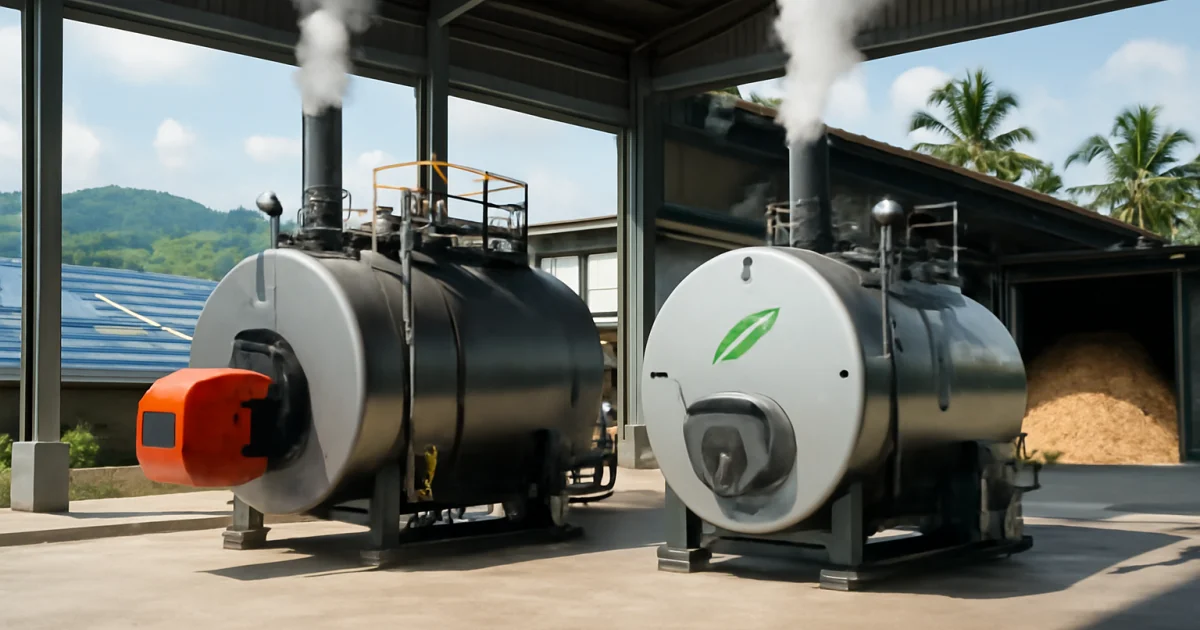
The landscape of industrial heating in Malaysia is undergoing a major transformation. As global and local pressures for sustainability intensify, manufacturing plants, food processors, palm oil and biomass industries, and energy-intensive facilities are re-evaluating their approach to process heating. The drive for lower emissions, energy efficiency, and compliance with regulatory standards is steering the adoption of next-generation boiler systems and heating technologies.
Sustainable Boiler Solutions: A New Industrial Standard
Traditional boilers powered by fossil fuels are increasingly being replaced by systems that support renewable energy and efficient operation. Malaysian industries are shifting towards biomass-fired steam boilers and thermal oil heaters, utilising agricultural residues, palm kernel shells (PKS), wood waste, and other biomass fuels. These solutions reduce reliance on conventional fuels, lower carbon emissions, and can transform waste into useful energy.
Biomass boilers also align with Malaysia’s push towards a circular economy, offering an alternative to landfill disposal and supporting environmental compliance. Companies with access to agricultural by-products can convert these into a dependable energy resource, reducing operational costs and environmental impact.
Thermal Oil Heaters: Precision and Low-Pressure Safety
Modern thermal oil heating systems are gaining popularity across chemical, food processing, and manufacturing sectors. Unlike steam boilers, thermal oil heaters can achieve high process temperatures while operating at relatively low pressure, enhancing safety and reducing risks associated with high-pressure steam systems.
With advanced controls and heat recovery integration, these systems offer precise temperature regulation, improved process reliability, and reduced fuel consumption. The adoption of biomass fired thermal oil heaters further supports the goal of sustainable and cost-effective process heating in Malaysia.
Energy Efficiency and Waste Heat Recovery
Energy efficiency is now a top priority for Malaysian industries seeking to optimise production costs and environmental performance. New boiler installations increasingly feature waste heat recovery units, economisers, and integrated heat exchange systems. These technologies capture and repurpose heat that would otherwise be lost, boosting overall efficiency and lowering fuel usage.
Cogeneration or combined heat and power (CHP) systems are also gaining traction, enabling facilities to generate electricity alongside process steam or hot water. By maximising energy extraction from every unit of fuel, industries can meet their heat and power needs while minimising greenhouse gas emissions.
Compliance, Maintenance, and Lifecycle Management
As regulatory frameworks tighten, ensuring compliance with DOSH (JKKP) and DOE (JAS) standards is essential for all industrial boiler users in Malaysia. Modern boiler systems come equipped with advanced monitoring, safety controls, and emissions reduction technologies to support legal compliance and workplace safety.
In addition, proactive boiler maintenance and timely upgrades are vital. Companies are investing in industrial boiler maintenance and retrofit services to prolong equipment life, improve efficiency, and avoid costly downtime. Access to genuine boiler spares and accessories ensures that repairs and overhauls restore optimal performance without compromising safety or reliability.
Turnkey Solutions and Project Support
More Malaysian industries are choosing partners who offer complete turnkey solutions—from engineering design and equipment supply to installation, commissioning, and regulatory submissions. This integrated approach streamlines project delivery, ensures compatibility across system components, and simplifies compliance with local standards.
Providers like Sinflon Engineering Sdn Bhd deliver end-to-end project management, customising solutions to the specific needs of each plant, whether for new installation, retrofit, or expansion. Their expertise in multi-fuel systems, including biomass, gas, and oil, allows customers to select the most suitable technology for their operational and sustainability targets.
Air Pollution Control and Environmental Compliance
Beyond the boiler room, industries are increasingly focused on controlling air emissions and meeting environmental regulations. The adoption of air pollution control systems such as electrostatic precipitators, baghouses, and scrubbers ensures that particulate matter and pollutants are effectively managed. This not only supports compliance but also demonstrates a commitment to responsible industrial practices and community well-being.
Conclusion: The Future of Boiler Malaysia
The trend is clear—Malaysian industries are embracing sustainable, efficient, and compliant boiler systems as part of their journey towards greener operations. By investing in advanced steam boilers, thermal oil heaters, energy-efficient upgrades, and robust maintenance regimes, businesses can achieve both their production goals and environmental responsibilities.
As the regulatory and market landscape continues to evolve, staying ahead means partnering with experienced providers who understand the complexities of industrial heating in Malaysia. The path forward points to integrated, future-ready solutions that deliver reliability, efficiency, and sustainability for all sectors.
Frequently Asked Questions
What are the main benefits of switching to biomass-fired boiler systems in Malaysia?
Biomass-fired boiler systems allow Malaysian industries to use renewable fuels like palm kernel shells, rice husk, and wood waste—reducing dependency on fossil fuels and lowering greenhouse gas emissions. They also help companies manage agricultural waste and support compliance with environmental regulations.
How do thermal oil heaters differ from traditional steam boilers?
Thermal oil heaters provide precise temperature control while operating at lower pressure than steam boilers, reducing safety risks. They’re ideal for processes requiring consistent high temperatures and can be designed to use biomass or other alternative fuels for greater sustainability.
Why is regular boiler maintenance important for industrial plants?
Regular maintenance extends boiler lifespan, improves efficiency, and minimises downtime. It also ensures that safety systems and emission controls function correctly, helping plants comply with Malaysian DOSH (JKKP) and DOE (JAS) regulations.
What role do waste heat recovery systems play in modern boiler plants?
Waste heat recovery systems capture excess heat from boiler exhaust or process streams and reuse it within the facility, reducing fuel consumption and energy costs. This supports energy efficiency and helps industries achieve sustainability targets.
What should Malaysian industries look for in a boiler system supplier?
Industries should prioritise suppliers with proven experience, a comprehensive product range, turnkey project capability, and strong after-sales support. Providers that offer compliance assistance, custom engineering, and multi-fuel solutions—such as Sinflon Engineering Sdn Bhd—can deliver greater long-term value.
Ready to Upgrade to Sustainable Boiler Solutions?
Transform your facility with energy-efficient, compliant, and reliable boiler systems from Sinflon Engineering Sdn Bhd. Our expertise covers steam boilers, biomass and thermal oil heaters, hot water generators, air pollution control, and comprehensive maintenance services. Let us help you future-proof your industrial heating and meet your sustainability goals.